

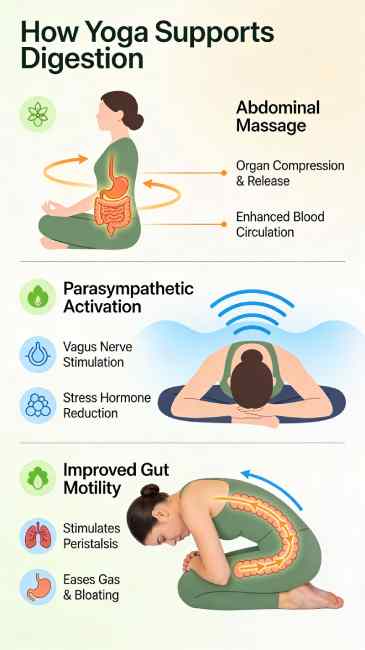
Yoga poses that gently compress, twist, and lengthen the abdomen can stimulate peristalsis, ease gas, and support overall gut motility, making them a powerful non‑drug tool for better digestion. When practiced consistently alongside a balanced diet and good hydration, yoga can reduce bloating, constipation, and even symptom severity in conditions like irritable bowel syndrome (IBS).
How Yoga Supports Digestion (Yoga Poses For Digestion)
-
Gentle abdominal compression and twisting can massage the digestive organs, improving blood flow and motility in the stomach and intestines.
-
Slow, diaphragmatic breathing activates the parasympathetic “rest and digest” response, reducing stress‑related gut symptoms.
-
Regular yoga practice has been linked with improved IBS symptom scores, better gastric motility, and reduced anxiety, all of which influence digestive health.
Best Yoga Poses for Digestion (yoga for digestion poses)
Below are key poses you can structure into a 20–30 minute “better digestion” sequence. Hold each pose for 5–10 slow breaths unless otherwise noted.
1. Cat‑Cow Pose (Marjaryasana–Bitilasana)
-
Moving between arching and rounding the spine gently massages abdominal organs and improves spinal flexibility, which can relieve gas and mild cramping.
-
Focus on inhaling as you drop the belly (Cow) and exhaling as you round the spine (Cat) to sync breath with movement and relax the nervous system.
2. Seated or Supine Twist (Ardha Matsyendrasana / Reclined Twist)
-
Twists create a wringing effect on the abdomen, temporarily compressing and then releasing the digestive tract to support peristalsis and elimination.
-
Reclined twists are especially useful after meals because they are low‑intensity and help redistribute trapped gas without stressing the body.
3. Wind‑Relieving Pose (Pawanmuktasana)
-
Drawing one or both knees to the chest compresses the ascending and descending colon, helping to release trapped gas and ease bloating.
-
Slow exhalations as you hug the knees in can reduce abdominal tension and support gently improved bowel movement frequency.
4. Child’s Pose (Balasana)
-
Folding forward in Child’s Pose relaxes the back and abdominal wall, creating a mild massage effect on the internal organs while calming the mind.
-
This pose is particularly helpful for stress‑triggered digestive discomfort because it down‑regulates the stress response and slows the breath.
5. Cobra or Sphinx Pose (Bhujangasana / Salamba Bhujangasana)
-
Gentle backbends stretch the front of the body and stimulate the abdominal region, which may support stomach and intestinal circulation.
-
Sphinx (on forearms) is ideal for those with lower back sensitivity, offering similar digestive benefits with less spinal load.
6. Knees‑to‑Chest Rock (Apanasana Variation)
-
Rocking gently side to side with both knees hugged in massages the lower back and colon, supporting gas movement and bowel regularity.
-
When combined with slow nasal breathing, this movement can reduce abdominal guarding and perceived pain in functional gut disorders.
7. Supported Forward Fold (Paschimottanasana with Props)
-
A supported seated forward fold (with a bolster or cushion under the chest) safely compresses the abdomen and lengthens the back body, aiding relaxation and digestion after food has partially settled.
-
Support reduces strain, making this pose suitable for beginners or people with tight hamstrings or lower back issues.
Evidence Snapshot: Yoga and Digestive Disorders
-
A review of 10 studies found that yoga improves IBS symptoms, stress/anxiety, and quality of life, with moderate overall evidence quality.
-
A 12‑week intensive yoga program showed a clinically meaningful reduction in IBS Symptom Severity Score, with improvements similar to or better than some conventional treatments.
Case Study: Yoga for IBS‑Related Bloating
-
A 34‑year‑old office worker with a 5‑year history of IBS‑C (constipation‑predominant IBS) experienced daily bloating, incomplete evacuation, and moderate anxiety.
-
Conventional management (fiber supplements and occasional laxatives) provided only partial relief, and symptoms worsened during high‑stress work periods.
Intervention
-
The person adopted a 30‑minute home‑based yoga routine 5 days per week, modeled on protocols used in IBS yoga trials.
-
The sequence included Cat‑Cow, Pawanmuktasana, gentle twists, supported forward folds, and 10 minutes of guided breathing and relaxation at the end.
Outcomes after 8–12 weeks
-
Self‑reported bloating frequency dropped from “daily” to “2–3 times per week,” and bowel movements increased from 3 to 5 times weekly.
-
IBS symptom severity scores (using a standardized scale) improved by over 100 points, which is considered clinically significant in IBS research.
This case is consistent with published findings where structured yoga programs delivered in‑person or online have led to improved IBS symptoms and better quality of life.
Practical Tips for Safe Practice
-
Wait 2–3 hours after a large meal before doing stronger twists or forward folds to avoid reflux or discomfort.
-
Focus on nasal breathing and long exhalations, which enhance parasympathetic activity and gut relaxation.
-
People with severe pain, unexplained weight loss, GI bleeding, or red‑flag symptoms should seek medical evaluation before relying on yoga as therapy.
New Update: Yoga, Gut Health & Industry Growth (2022–2025)
Emerging research and market data show increasing global interest in yoga for gut and overall health. The table below summarizes key trends from 2022–2025.
Key Yoga & Digestion‑Related Trends (2022–2025)
| Year | Global yoga industry value (approx.) | Notable digestive‑health insight | Yoga–gut research / guideline highlight |
|---|---|---|---|
| 2022 | Around USD 180 billion global revenue from yoga and related wellness segments. | Large global analyses confirm that digestive diseases remain a major cause of morbidity and disability worldwide. | Study protocols published for virtual yoga and meditation interventions in IBS, reflecting growing interest in online gut‑focused programs. |
| 2023 | Global yoga market estimated at about USD 107–110 billion in structured market reports, with strong growth projections. | Multinational data show that more than 40% of people have functional GI disorders that impair quality of life. | Meta‑analyses and reviews report that yoga reduces IBS symptom severity and improves stress and quality of life, though more high‑quality trials are needed. |
| 2024 | Industry value projected around USD 195 billion, with online and hybrid yoga formats expanding rapidly. | Growing recognition that lifestyle, stress, and physical activity significantly influence the burden of digestive diseases. | New work explores combined interventions such as yoga plus probiotics, showing improvements in IBS quality of life and microbiome profiles. |
| 2025 | Global yoga market projections for mid‑decade range from about USD 63–126 billion depending on methodology, with strong expected CAGR through 2030–2032. | Updated global and regional GBD‑based forecasts highlight that digestive disease burden will likely remain high through 2030 without preventive strategies. | Clinical guidance for IBS (for example, the 2025 Seoul consensus) recommends gentle, low‑intensity activity including yoga as part of lifestyle management. |
By combining evidence‑based yoga poses, mindful breathing, and consistency, readers of thewellhealthorganic.com can build a safe, home‑friendly digestion sequence that supports gut health while aligning with global trends in holistic wellness.