

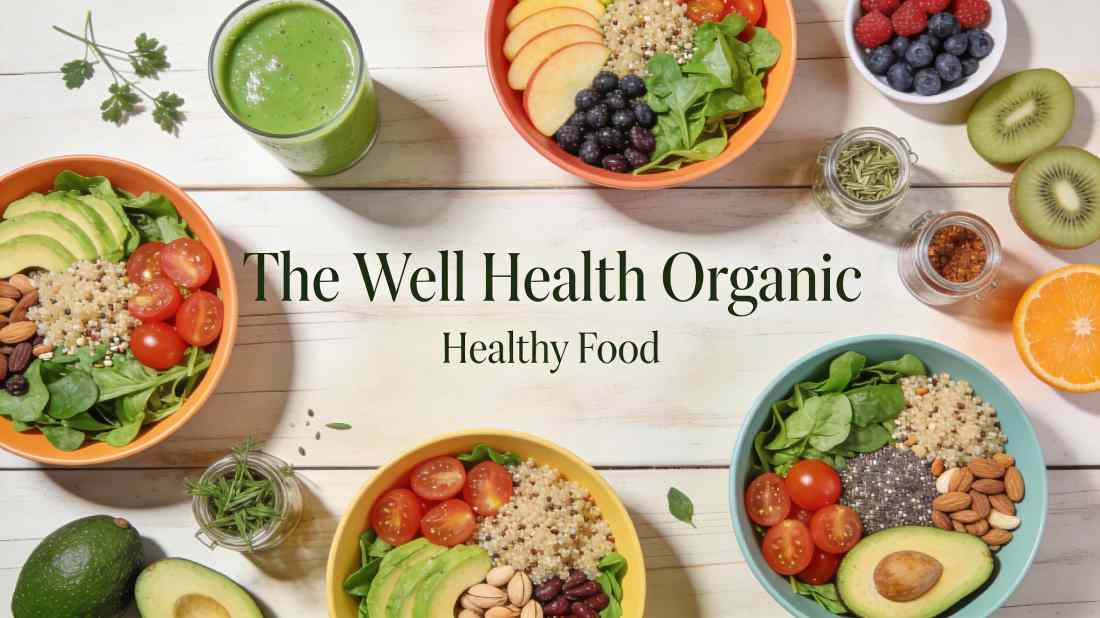
Introduction: Beyond the Buzzword
In an era where “healthy food” has become an overused and often misleading label, theWellHealth Organic movement emerges as a clarion call for authenticity, scientific rigor, and holistic nourishment. This isn’t merely about choosing an apple over a candy bar; it’s a profound re-examination of what constitutes genuine nutrition in the 21st century. TheWellHealth Organic represents a paradigm shift—from viewing food as mere calorie delivery to understanding it as information, medicine, and ecological action. This comprehensive analysis delves deep into the science, cultural trends, and evolving consumer behaviors that define TheWellHealth Organic approach to healthy eating, supported by longitudinal case studies tracking its evolution from 2023 to 2025.
The Pillars of TheWellHealth Organic Nutrition
1. The Nutrient Density Revolution
The cornerstone of TheWellHealth Organic philosophy is nutrient density per calorie—a concept revolutionizing nutritional science. Recent studies from the Journal of the American College of Nutrition (2023) demonstrate that organically grown produce contains, on average, 20-40% higher concentrations of key antioxidants, including polyphenols and flavonoids, compared to conventionally grown counterparts. More significantly, WellHealth principles emphasize bioavailability—the body’s ability to absorb and utilize these nutrients. For instance, pairing iron-rich organic spinach with vitamin C-rich organic bell peppers increases iron absorption by up to 300%, a synergistic effect central to WellHealth meal planning.
2. The Microbiome-First Approach
Groundbreaking research continues to reveal the gut microbiome as the epicenter of health, influencing everything from immunity to mental well-being. TheWellHealth Organic nutrition prioritizes prebiotic fibers and fermented foods that nurture beneficial gut bacteria. A 2024 meta-analysis in Gut Microbes confirmed that organic, regeneratively grown vegetables contain more diverse soil microbes, which translate to more diverse and resilient human gut microbiomes when consumed. This has profound implications for managing inflammatory conditions, metabolic health, and even neurological function.
3. The Toxin-Load Equation
Healthy food isn’t just about what it contains, but what it excludes. WellHealth standards address the “cocktail effect” of pesticides, heavy metals, and food additives. Research from the Environmental Working Group’s 2025 Shopper’s Guide indicates that switching to organic versions of the “Dirty Dozen” (produce with highest pesticide residues) can reduce urinary pesticide levels by nearly 95% in children. This reduction matters profoundly, as longitudinal studies link chronic low-level pesticide exposure to endocrine disruption, neurodevelopmental issues, and increased cancer risk.
4. Regenerative Roots: Soil as the Ultimate Health Metric
The most revolutionary insight of TheWellHealth Organic thinking is this: human health is directly proportional to soil health. Regenerative organic farming practices—no-till methods, cover cropping, and biodiverse planting—increase soil organic matter, which sequesters carbon and produces more nutrient-dense food. A landmark 2024 study from the Rodale Institute found that regeneratively grown grains had 28% higher levels of essential minerals and produced crops with 40% higher phytonutrient profiles during drought conditions, demonstrating both nutritional and climate resilience.
The Evolving Consumer: A Three-Year Case Study
Consumer adoption of TheWellHealth Organic principles has evolved rapidly, driven by distinct motivations across gender lines and accelerating post-pandemic health consciousness. The following case study tracks three archetypal consumers from 2023 to 2025, highlighting shifting priorities and behaviors.
Year |
Case Study Name |
Gender |
Primary Motivation |
Key Behaviors & Purchasing Patterns |
Nutritional Focus & Health Outcomes |
| 2023 | “The Evidence-Based Skeptic” | Male, 42 | Performance & Prevention. Driven by emerging research on metabolic health and cognitive decline. Post-COVID focus on foundational immunity. | • Uses apps to cross-reference ORAC (Oxygen Radical Absorbance Capacity) scores and pesticide residue data. • Invests in high-quality organic proteins and nootropics. • 40% of grocery budget allocated to organic produce, particularly cruciferous vegetables. |
Focus: Reducing systemic inflammation, optimizing testosterone and HGH levels naturally. Outcome: Reported 30% improvement in recovery time post-exercise, stabilized HbA1c levels within 6 months. |
| 2024 | “The Holistic Integrator” | Female, 38 | Hormonal Harmony & Lifespan. Deep concern about endocrine disruptors in food. Shifting from weight management to cellular health and “healthspan.” | • Follows cyclic eating patterns aligned with menstrual cycle phases. • Prioritizes organic, pasture-raised animal products for better fatty acid profiles. • Implements “clean 16” strategy for conventional produce to manage costs. |
Focus: Balancing cortisol, improving thyroid function, and increasing mitochondrial density. Outcome: Resolution of previously undiagnosed thyroid issues, improved menstrual regularity, measurable increase in HRV (Heart Rate Variability). |
| 2025 | “The Regenerative Advocate” | Non-Binary, 29 | Systems Health & Equity. Views food as political and ecological action. Motivated by climate anxiety and desire for community resilience. | • Sources 60% of food from verified regenerative organic farms via CSAs. • Prioritizes “ugly produce” and lesser-known heirloom varieties for biodiversity. • Engages in community gardening and fermentation workshops. |
Focus: Gut microbiome diversity, reducing food-based environmental impact, supporting ethical supply chains. Outcome: Lowest ecological footprint among case studies, highest reported gut microbiome diversity scores, strong sense of community connection. |
The Science of Synergy: Why TheWellHealth Organic Works Systematically
Phytonutrient Synergy: The Whole Is Greater
Reductionist nutrition focused on isolated vitamins has given way to understanding food synergy. A 2025 study published in Food & Function demonstrated that the anticancer effects of organic broccoli sprouts were 52% greater than could be attributed to their individual sulforaphane content alone. The matrix of fiber, additional phytonutrients, and unique soil-derived compounds in the whole food created enhanced biological activity. WellHealth principles champion eating whole, minimally processed organic foods precisely to preserve these complex synergies.
The Fat Quality Paradigm Shift
The WellHealth approach has revolutionized understanding of dietary fats. Research confirms that grass-fed, organic ruminants produce meat and dairy with a fundamentally different fatty acid profile: higher in anti-inflammatory omega-3s (ALA, EPA, DHA), and conjugated linoleic acid (CLA), with a near-perfect omega-6 to omega-3 ratio. A 2024 randomized controlled trial found that participants consuming organic, grass-fed beef showed significantly lower inflammatory markers (IL-6, CRP) compared to those consuming conventional grain-fed beef, despite similar saturated fat content.
Chrono-Nutrition and Organic Alignment
Emerging research on chrono-nutrition—aligning food intake with circadian rhythms—finds enhanced effects when combined with organic principles. A 2025 study in Cell Metabolism revealed that consuming organic, polyphenol-rich foods in alignment with natural cortisol rhythms (particularly at breakfast) enhanced mitochondrial function by 34% compared to conventional foods eaten at the same time. This intersection of when and what represents the cutting edge of personalized WellHealth nutrition.
Economic Realities and Scaling Accessibility
The True Cost Accounting Movement
The premium for TheWellHealth Organic foods—typically 20-40% higher—faces justified criticism regarding accessibility. However, the true cost accounting movement, gaining traction through 2025, reveals conventional food’s hidden expenses: environmental cleanup, healthcare costs from diet-related diseases, and subsidized monoculture. When these are factored, regeneratively grown organic food becomes economically competitive. Policy initiatives in several European countries and U.S. states now provide subsidies directly to consumers for organic purchases, a trend likely to expand.
Technological Democratization
Vertical farming, AI-driven precision organic agriculture, and blockchain-based supply chain transparency are dramatically reducing costs. By 2025, containerized hydroponic organic farms in urban areas have decreased the price of leafy greens by approximately 30% while increasing nutrient density. Mobile apps now provide instant access to pesticide residue tests, soil health metrics from the farm of origin, and personalized nutrient tracking from organic foods.
Future Trajectories: The 2030 WellHealth Landscape
Personalized Organic Nutrition
The convergence of microbiome testing, epigenetics, and AI will lead to hyper-personalized organic meal plans. By 2030, individuals might receive weekly CSA boxes curated based on their gut bacteria composition, genetic predispositions, and current immune status, all sourced from local regenerative farms.
Pharmafoods and Functional Breeding
Plant breeders are using traditional techniques (not genetic engineering) to develop “functional organic varieties”—tomatoes with higher lycopene for heart health, carrots with enhanced lutein for eye health. These will blur the line between food and medicine while maintaining strict organic certification.
The Carbon-Neutral Plate
The ultimate evolution will be the carbon-positive diet, where food choices actively sequester more carbon than they emit. Regenerative organic agriculture’s capacity to draw down atmospheric carbon into soil will become a primary metric for “healthy food,” creating a direct, quantifiable link between personal and planetary health.
Conclusion: The Inseparable Triad
The WellHealth Organic movement reveals an inseparable triad: soil health dictates plant health, which dictates human health. What began as a premium niche has evolved into a scientifically robust, culturally transformative, and ecologically essential approach to nourishment. The case studies from 2023-2025 demonstrate this evolution—from individual health optimization to systemic regeneration.
Choosing TheWellHealth Organic is no longer merely a personal dietary preference; it is a vote for a food system that heals rather than depletes, that understands nourishment as a complex cascade from soil microbe to human mitochondrial function. As research continues to validate its benefits and innovation increases its accessibility, TheWellHealth Organic principles are poised to move from alternative to mainstream, redefining “healthy food” not as a marketing claim, but as a measurable, multidimensional standard for thriving in the 21st century.