

Last Updated: August 18, 2026
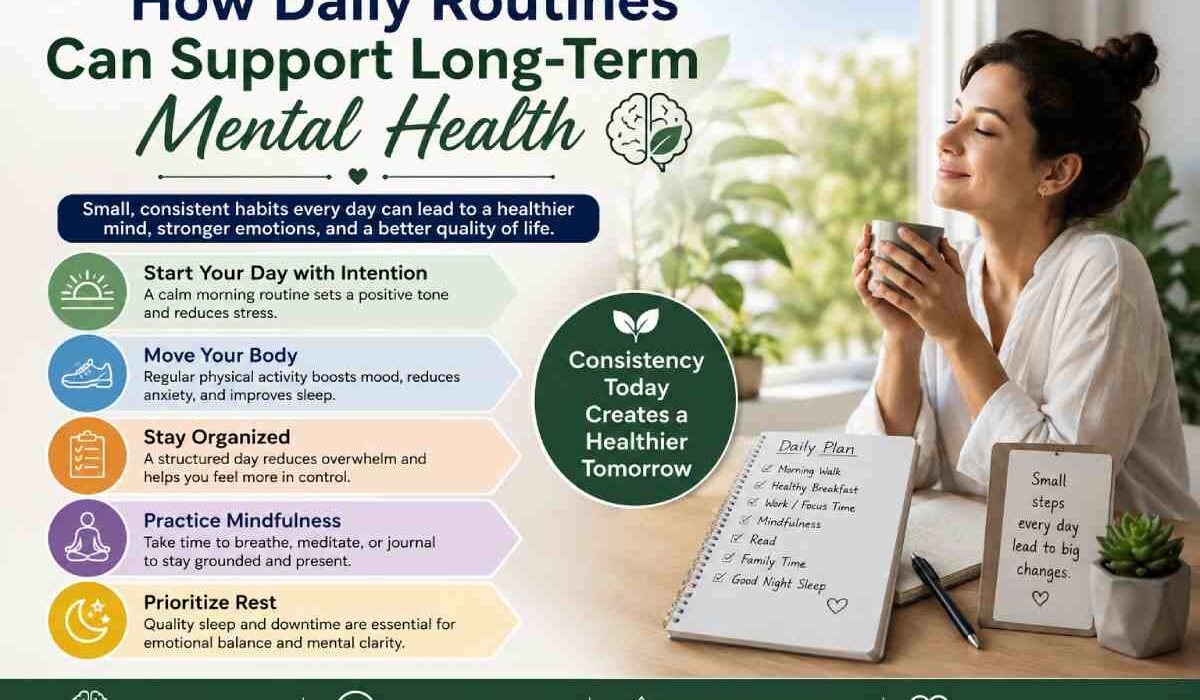
Mental health is shaped by more than what happens during difficult moments. The small choices repeated each day can influence sleep, energy, stress levels, focus, and the ability to cope when life becomes demanding.
Research for this guide drew on current guidance from major public health organizations, with a focus on practical habits that can fit into everyday life. The goal is not to create a perfect schedule. It is to build a few steady habits that make caring for mental health easier over time.
A useful routine can create structure without making every hour feel planned. Even simple anchors, such as waking at a similar time, eating regular meals, moving during the day, or creating a calming bedtime ritual, can provide a sense of consistency when other parts of life feel less predictable.
Why Simple Routines Can Make a Difference
Daily routines reduce the number of decisions a person has to make about basic self-care. When healthy behaviors have a regular place in the day, they can become easier to maintain during busy or stressful periods.
Mental health support can also become part of that structure. Just as sleep, movement, and other healthy habits can have a regular place in the day, professional support can be incorporated into a broader approach to mental well-being. Therapy can provide a dedicated space to work through stress, anxiety, low mood, relationship challenges, or other concerns with a mental health professional. Making time for that support can complement everyday habits and contribute to caring for mental health over time.
Sleep is another useful place to build consistency. The National Institute of Mental Health recommends prioritizing sleep and sticking to a schedule. A regular bedtime and wake time can create a stronger rhythm for the day. A short wind-down routine may include dimming the lights, putting away work, limiting screen time, reading, stretching, or practicing a quiet breathing exercise.
Movement can serve as another daily anchor. It does not need to mean an intense workout. Walking, gardening, dancing, stretching, or taking active breaks from a desk can all add movement to the day. Physical activity can also support overall emotional well-being and provide a healthy way to break up periods of work or inactivity.
Food and hydration deserve a place in the routine as well. Skipping meals during a stressful workday can leave a person feeling tired or distracted. Planning regular meals, keeping water nearby, or preparing simple foods in advance can reduce some of that friction.
Build a Routine That Is Flexible Enough to Last
A routine is most useful when it works in real life. An ideal schedule that lasts three days offers less value than a simple routine that can continue through demanding weeks.
Start with a small number of habits:
- Wake up and go to bed within a reasonably consistent time range.
- Eat meals at regular points during the day.
- Add a walk, stretch break, or another form of movement.
- Set aside a few minutes for a calming activity.
- Create regular opportunities to connect with friends or family.
- Keep some separation between work time and personal time.
These actions do not need to happen perfectly. Consistency can include flexibility. Missing a morning walk or staying up late one night does not erase the value of the overall routine. The goal is to have familiar habits to return to.
It can also help to notice which routines improve mood and which ones create extra pressure. A packed morning checklist might motivate one person while making another feel rushed. A long meditation session might be relaxing for one person while a five-minute walk works better for someone else.
Social connection can be a particularly useful part of a long-term routine. The Centers for Disease Control and Prevention says strong social connections can support both mental and physical health. Scheduling a weekly phone call, having dinner with family, joining a local group, or regularly checking in with a friend can make connections more intentional rather than leaving them to chance.
Digital habits matter too. Work messages, social media, news alerts, and entertainment can easily fill spaces that once provided natural downtime. Setting a regular point to stop checking work email or putting a phone outside the bedroom may create more room for rest.
The best routine is not the busiest one. It is the one that helps a person meet basic needs while leaving enough space to adjust when life changes.
Small Habits Can Create a Stronger Foundation
Daily routines cannot prevent every period of stress, anxiety, sadness, or emotional difficulty. They can create a steadier foundation for dealing with those experiences.
That foundation may include regular sleep, nourishing meals, movement, relationships, relaxation, and time away from work. It may also include professional mental health care when symptoms become persistent, severe, or begin interfering with normal responsibilities and relationships.
Routines should support life rather than control it. Starting with one or two manageable changes often makes more sense than redesigning an entire day at once. Once those habits feel natural, another can be added.
Over time, familiar routines can make healthy choices require less planning and create reliable moments for rest, movement, connection, and reflection. Mental health is not maintained by a single habit. It is supported through patterns that are realistic enough to return to day after day.