

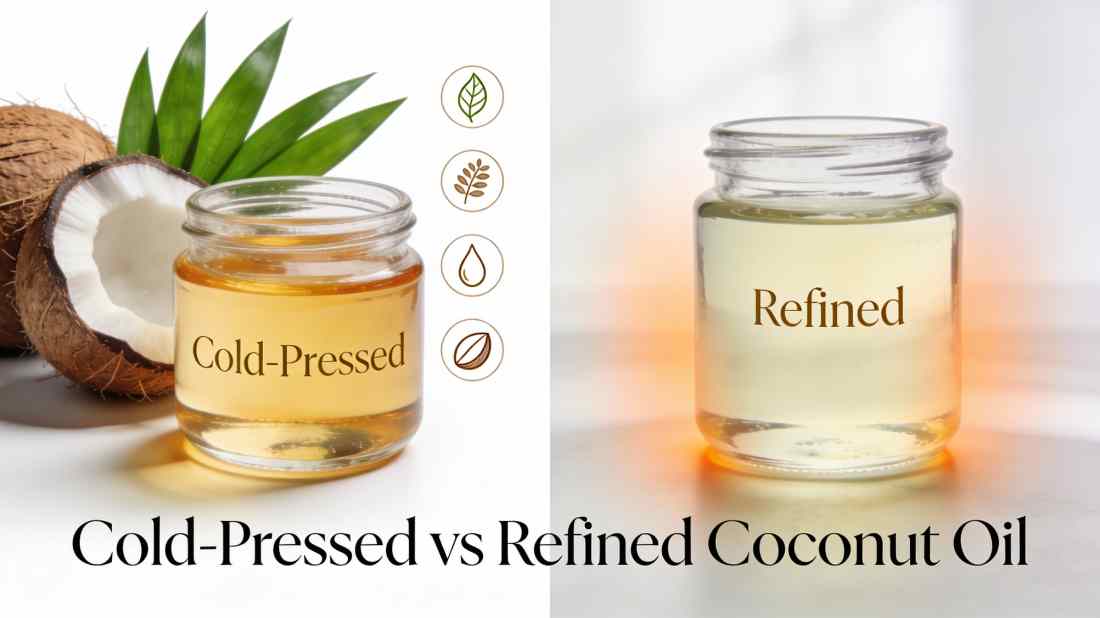
In an era where health-conscious consumers scrutinize every ingredient in their kitchen, the debate between cold-pressed and refined coconut oil has intensified significantly. This comprehensive analysis explores the nutritional, health, and market dimensions of these two distinct products, providing evidence-based insights to help you make informed purchasing decisions.
Understanding the Processing: Where Quality Begins
The fundamental difference between cold-pressed and refined coconut oil lies in extraction methodology. Cold-pressed coconut oil is obtained through mechanical pressing at temperatures below 50°C, a gentle process that preserves the oil’s natural architecture. In stark contrast, refined coconut oil undergoes multiple processing stages including degumming, neutralization (using sodium hydroxide), bleaching, and deodorization at temperatures exceeding 240°C.
This processing distinction creates measurable consequences. Research demonstrates that refined oils experience substantial nutrient loss during refining stages, with total tocopherol content declining from 12.39 mg/kg to just 0.10 mg/kg—representing a 99% reduction. Similarly, sterol components decrease from 679.69 mg/kg to 426.50 mg/kg following refinement. These micronutrients serve as antioxidants crucial for cellular protection and metabolic health.
The refining process generates an additional concern: the formation of potentially hazardous contaminants. High-temperature deodorization specifically creates 3-monochloropropane-1,2-diol esters (3-MCPD esters) and glycidyl esters (GEs). While these compounds appear in minimal quantities in crude oil (0.21 and 0.29 mg/kg respectively), their increase through processing raises questions about long-term safety.
Market Evolution and Consumer Preference (2022-2025)
The coconut oil market presents a fascinating paradox: while overall refined coconut oil production remains stable, consumer demand is progressively shifting toward cold-pressed varieties. The cold-pressed coconut oil market demonstrated robust expansion, growing from $2.90 billion in 2022 to $3.63 billion in 2024—a compound annual growth rate of 7.2%. Projections indicate this segment will reach $6.33 billion by 2032, substantially outpacing the modest 0.3% volume growth in refined oils.
What drives this preference shift? Consumer research from Bangalore (2023) reveals compelling priorities: health benefits dominated purchasing decisions with a relative importance score of 39.979, substantially ahead of price (37.011) and brand recognition (23.010). This data suggests that consumers increasingly view coconut oil as a functional food rather than a commodity ingredient—they’re willing to pay premium prices for superior nutritional profiles.
Market Trend Table: Coconut Oil Segment Performance (2022-2025)
| Year | Cold-Pressed Market Size (USD Billions) | Refined Market Growth Rate (%) | Global Demand (Million Metric Tons) | Market Driver |
|---|---|---|---|---|
| 2022 | $2.90 | Stable | 4.6 | Organic certification growth |
| 2023 | $3.10 | 0.2% | 4.65 | Health consciousness surge |
| 2024 | $3.63 | 0.3% | 4.80 | Clean beauty movement |
| 2025 | $3.88 (Est.) | 0.3% | 4.95 (Est.) | AI-driven personalization |
This market divergence reflects fundamental shifts in consumer consciousness. Increased research publications on coconut oil’s health properties, coupled with aggressive marketing by wellness influencers, have elevated cold-pressed varieties from niche products to mainstream staples. The cold-pressed segment captures market share from both refined coconut oil and alternative oils, suggesting it’s not merely expanding within a static category but actively converting traditional consumers.
Nutritional Architecture: Cold-Pressed Superiority
Cold-pressed coconut oil retains the complete nutrient profile present in fresh coconut kernel, maintaining essential fatty acids, medium-chain triglycerides (MCTs), vitamins (particularly E and K), and antioxidants that refined processing systematically eliminates. The preservation of these compounds creates tangible health implications.
Medium-chain triglycerides warrant particular attention. Unlike long-chain fats requiring hepatic metabolism, MCTs bypass normal digestion and proceed directly to the liver for rapid conversion into energy. This metabolic distinction explains why MCT-rich coconut oil increasingly features in ketogenic diet protocols and functional food formulations. Research indicates MCTs enhance metabolism and improve lipid profiles when consumed in appropriate quantities.
The antioxidant profile proves equally significant. Cold-pressed coconut oil contains natural polyphenols that combat oxidative stress—a fundamental mechanism in aging and chronic disease development. These compounds demonstrate antimicrobial and antifungal properties, with clinical studies confirming efficacy against pathogenic organisms including Candida albicans and Staphylococcus aureus.
Cardiovascular Considerations: The Nuanced Picture
One of the most contested claims involves coconut oil’s cardiovascular impact. A comprehensive 2020 meta-analysis of 16 randomized controlled trials found that coconut oil consumption increased LDL cholesterol by 10.47 mg/dL and HDL cholesterol by 4.00 mg/dL compared to non-tropical vegetable oils. While the LDL elevation appears concerning, the simultaneous HDL improvement and negligible effect on triglycerides complicates the narrative of inherent cardiovascular risk.
Critically, this meta-analysis did not distinguish between virgin and refined coconut oil—a significant methodological limitation. A 2023 peer-reviewed study revealed that refined coconut oil’s cholesterol-raising effects stem partially from processing-derived contaminants (specifically 3-MCPD esters and glycidyl esters) rather than the oil’s inherent fatty acid composition. When these contaminants were reintroduced into virgin oil experimentally, they replicated the cholesterol-synthesis increase observed in fully refined products. Conversely, adding natural phenolic antioxidants to refined oil mitigated these effects.
This distinction matters enormously: it suggests that cold-pressed coconut oil’s cardiovascular profile may be measurably superior to refined varieties, yet existing research lumps these products together. Furthermore, comparing coconut oil to refined vegetable oils introduces confounding variables—refined seed oils undergo equally harsh processing and may harbor their own chemical contaminants.
Case Study: Bangalore Consumer Research (2023)
A rigorous quantitative study examined consumer decision-making among 60 respondents in Bangalore across diverse demographics (61.7% male, 43.3% with master’s degrees, 58% employed). Using conjoint analysis to measure attribute importance, researchers identified health benefits as the dominant purchasing factor, dwarfing both price and brand loyalty.
Notably, respondents who had family members with cholesterol concerns preferentially purchased refined coconut oil, perceiving it as lower-risk due to its lighter profile and unfamiliarity with contaminant research. This disconnect between consumer perception and scientific evidence highlights a critical gap: wellness-focused consumers lack accessible information about processing impacts on nutritional quality.
The study concluded that targeted marketing emphasizing processing methodology and nutrient retention could substantially influence purchasing behavior, particularly among educated, higher-income consumers—precisely the demographic showing strong growth in premium cold-pressed coconut oil adoption. This insight reveals why market share continues shifting toward cold-pressed products despite minimal direct advertising budgets.
Practical Applications: When to Use Each Type
Cold-Pressed Coconut Oil Optimal Uses:
- Low to medium-heat cooking (salad dressings, low-temperature sautéing)
- Smoothies and beverages (maximizes nutrient intake)
- Skincare and personal care applications (antimicrobial benefits)
- Therapeutic supplementation (MCT and antioxidant benefits)
- Baking at temperatures below 350°F
Refined Coconut Oil Optimal Uses:
- High-heat cooking (stir-frying, deep frying at 450°F+)
- Commercial food manufacturing (neutral flavor, extended shelf life)
- Applications requiring bland taste (some formulations)
- Budget-conscious bulk usage
The Bottom Line for Health-Conscious Consumers
The evidence decidedly favors cold-pressed coconut oil for nutritional and health applications. Its preserved micronutrient content, absence of processing contaminants, and rich antioxidant profile position it as the superior choice for direct consumption. The 7.2% market growth rate reflects rational consumer decision-making driven by health priorities rather than marketing hype.
The cardiovascular concerns frequently cited derive primarily from refined coconut oil studies, where processing-generated contaminants appear to drive cholesterol elevation. Cold-pressed variants, lacking these contaminants, represent a meaningfully different product category—one that deserves separate research attention and more favorable health positioning.
For consumers willing to pay premium prices ($12-18 per liter versus $6-10 for refined), cold-pressed coconut oil delivers measurable nutritional advantages, greater gastrointestinal tolerability due to preserved beneficial compounds, and alignment with clean-label consumer values. The growing market trajectory and evolving consumer preference data suggest this assessment reflects broader consumer intuition validated by emerging scientific evidence.