

Last Updated: August 3, 2026
Key Takeaways
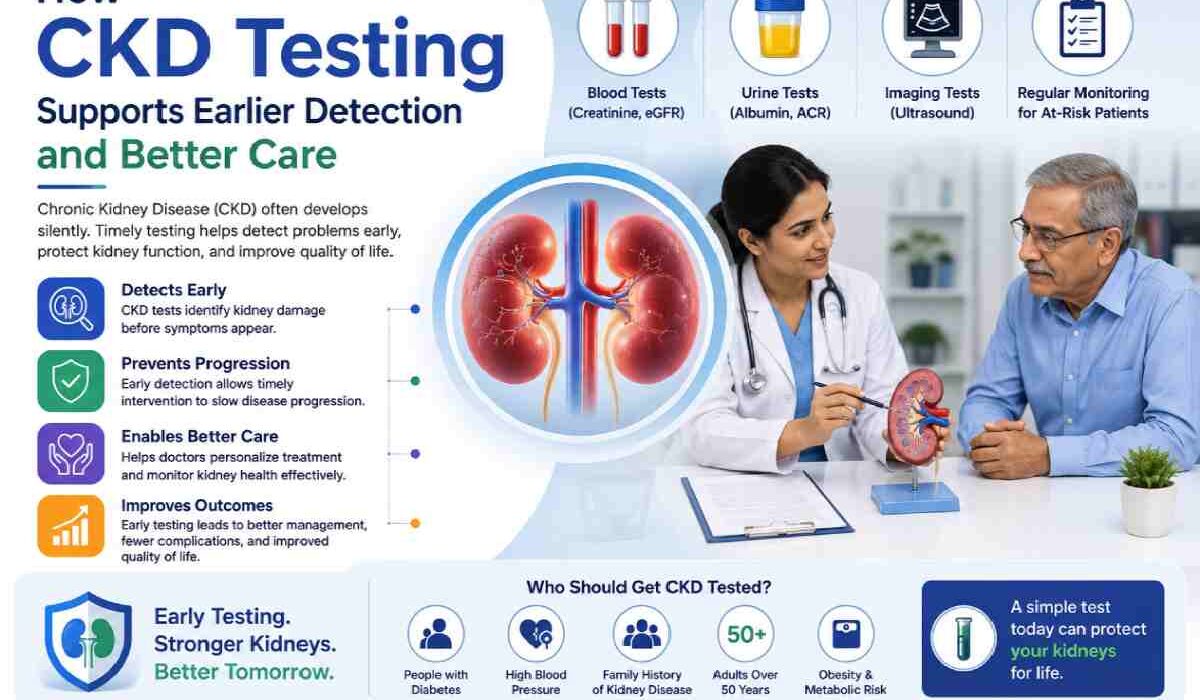
Chronic Kidney Disease (CKD) Testing is essential, not just for detecting disease, but also for enhancing patient care and boosting health outcomes.
Healthcare providers use predictive analytics in CKD Testing to foresee patient needs and necessary interventions, fundamentally altering the course of CKD management.
By catching CKD early, the progression to end-stage renal disease can be reduced by up to 50%, underscoring the importance of routine screenings.
Monitoring glomerular filtration rate (GFR) is critical as it serves as the gold standard for assessing kidney function, guiding treatment decisions with precision.
Additional biomarkers like albuminuria and blood urea nitrogen (BUN) offer vital glimpses into kidney health and any potential damage.
Automation and digital solutions in CKD Testing enhance accuracy and efficiency, leading to quicker diagnoses and fewer human errors in lab work.
Employing collaborative care models with interdisciplinary teams improves communication and leads to a comprehensive approach to CKD management, promoting superior patient outcomes.
Discovering Diagnostic Precision: How CKD Testing Enhances Patient Care
Chronic Kidney Disease (CKD) is a silent yet widespread health issue that impacts millions globally. While many recognize the significance of kidney health, few understand the substantial benefits associated with thorough CKD Testing. It goes beyond mere disease identification; it’s about refining patient care and enhancing outcomes. Interestingly, even perceptive healthcare professionals might miss crucial advantages in CKD Testing that can reshape patient journeys.
A fundamental aspect of this transformation is the role of predictive analytics. This approach enables doctors to anticipate what patients need. Predictive models analyze various factors, helping providers forecast disease progression. With a solid grasp of individual risk factors, tailored interventions can be implemented, shifting the CKD trajectory more favorably.
The Role of Predictive Analytics in CKD Testing
Predictive analytics stands out as a crucial ally in combating CKD. By harnessing historical data alongside current test results, healthcare providers can glean insights that might otherwise remain obscured. This goes beyond theory; professionals see real improvements in managing chronic ailments.
- Early identification of high-risk patients can enable preventative strategies, potentially eliminating the need for dialysis or transplants.
- Such models can refine medication plans, ensuring that kidney function-specific dosing is precisely tailored.
- Data-driven insights reveal opportunities for patient education, thereby enhancing adherence to treatment protocols.
This is merely the starting point. A data-informed approach promises to disrupt the conventional methods of initiating and managing CKD care.
Timely Insights: Transforming Patient Outcomes with Early Detection
Early detection of CKD is of utmost importance. With timely insights, clinicians can step in before irreversible damage happens. However, this effort requires more than just routine testing; it necessitates a proactive mindset.
“Early detection in CKD can reduce the progression to end-stage renal disease by up to 50%.”
This figure isn’t just an eye-catching statistic; it underscores the necessity for adopting early screening protocols. Regular CKD Testing empowers healthcare teams to identify abnormalities, making early interventions possible to maintain kidney function.
- Regular screening equips physicians with the ability to swiftly monitor renal function changes.
- Individualized care plans emerge, paving the way for healthier outcomes.
- Comprehensive education ensures patients grasp their conditions and actively engage in their treatment.
These steps together reshape patient involvement in their health journeys. With CKD Testing laying the groundwork, earlier interventions result in better long-term well-being.
Unveiling Key Metrics: What CKD Tests Reveal Beyond the Basics
It’s a common misconception that CKD Testing revolves solely around basic kidney function metrics, like serum creatinine levels. There’s a wealth of information lying beneath the surface. Really understanding what tests can disclose offers layers of insight that are vital for effective management and treatment.
For instance, glomerular filtration rate (GFR) stands out as the benchmark for evaluating kidney function. Simply assessing creatinine levels won’t suffice; GFR offers comprehensive insights into how well the kidneys filter blood. Monitoring GFR values can flag emerging issues long before overt symptoms surface, providing a strategic framework for appropriate care and interventions.
Understanding Glomerular Filtration Rates: A Deep Dive
A deep dive into GFR reveals its relevance in everyday clinical practice. This metric is calculated using patient-specific factors: age, sex, race, and serum creatinine levels. A GFR decline can serve as an indicator for rigorous monitoring or immediate lifestyle modifications. So, what makes this so vital?
- It establishes baseline kidney function, facilitating long-term comparisons.
- A waning GFR can prompt proactive measures to halt further decline.
- GFR helps guide therapeutic choices for medications metabolized through the kidneys.
Regular GFR assessments can’t be stressed enough by health professionals. They are foundational for making informed treatment decisions.
Tracking Biomarkers: Insights into Kidney Health
Beyond GFR, CKD Testing encompasses a range of biomarkers that provide valuable insights into kidney health. Markers like albuminuria, blood urea nitrogen (BUN), and electrolyte levels contribute to a well-rounded view. But what do these tests truly indicate?
- Albuminuria may reveal potential kidney damage, often occurring before any functional decline.
- BUN sheds light on metabolic waste buildup, helping evaluate renal function.
- Electrolyte tests highlight critical imbalances that may require immediate attention.
By examining these biomarkers, healthcare teams can develop sharper, more effective care strategies that address not just symptoms, but underlying issues as well.
Technology-Driven Testing: The Future of CKD Diagnosis
In an era where speed and accuracy are paramount in healthcare, the role of technology in CKD Testing is crucial. Automation and innovative software solutions are changing lab processes for the better, enabling more timely and accurate results. This shift is recognized by professionals – it’s transforming the landscape of testing.
Automation transcends mere efficiency; it enhances reliability. The potential for errors in manual testing decreases significantly. As a result, clinicians receive data they can trust to inform their decision-making.
Automation in Labs: Enhancing Accuracy and Speed
Automated laboratory systems are changing the CKD Testing paradigm. These advanced solutions streamline testing processes, making them quicker and more dependable. Why is this important? In cases of acute kidney injury or CKD progression, every second matters.
- Quick turnaround times facilitate prompt diagnosis.
- Automated systems reduce human error, bolstering overall testing reliability.
- Consistent data quality preserves the integrity of patient information.
Digital Workflow Solutions: Streamlining CKD Testing Processes
Embracing digital workflows symbolizes the future of CKD Testing. These systems integrate various steps within the testing process, significantly improving efficiency. Engaging with digital solutions fosters multi-faceted advancements.
- Patient data can be stored and accessed efficiently, guaranteeing all healthcare providers have the latest information.
- Automated reminders can alert patients regarding follow-ups or essential testing, encouraging proactive care.
- Analytics can swiftly highlight trends and anomalies, allowing clinicians to respond flexibly.
In this tech-forward world, the benefits of streamlined testing processes are clear. As patients increasingly demand quicker and more precise healthcare, it’s crucial for professionals to adapt to emerging models in testing and results delivery.
Real-World Applications: How CKD Testing Supports Clinical Decisions
CKD Testing does not operate in isolation. Its real-world implications are substantial, influencing clinical decisions that directly impact patient health. Yet, there’s often a disconnect between test results and actionable responses. Bridging this gap is where professional expertise becomes invaluable.
Guiding treatment plans represents one of the primary applications. Strengthening the link between data insights and practical actions is critical. If interventions aren’t applied appropriately, even the most accurate testing yields limited benefits.
Guiding Treatment Plans: Evidence-Based Decision Making
Clear CKD Testing results often lead to evidence-based decision-making that effectively shapes treatment plans. Instead of relying on anecdotal evidence, healthcare providers leverage data insights. For example, timely adjustments to medication or lifestyle changes can take place promptly based on lab findings.
- Individualized treatment options cater to each patient’s specific needs.
- Monitoring progress over time enables clinicians to adapt treatment plans as necessary.
- Clinical decisions become rooted in factual data rather than conjectures.
This method fosters a deeper trust from patients, as those receiving care recognize a dedication to thoughtful and personalized decision-making.
Collaborative Care Models: Bridging Communication Gaps
The collaborative care model highlights a critical element of CKD Testing: effective communication. When various specialties work together, they assemble a more comprehensive picture of a patient’s health. A well-structured team consisting of nephrologists, dietitians, and primary care physicians can operate holistically for optimal outcomes.
- Regular communication ensures that all team members remain informed about patient status.
- Interdisciplinary meetings help translate testing insights into concrete care strategies.
- Patients reap substantial benefits as their care becomes coordinated and comprehensive.
The significance of collaborative care extends beyond mere clinical enhancement; it transforms the patient journey through CKD.
The multifaceted advantages of CKD Testing are far too significant to ignore. From early detection to decisions grounded in data, the positive impacts resonate throughout patient care. As technology continues to advance, the depth of insights delivered by CKD Testing is bound to expand, solidifying its essential role in effective kidney management.
FAQ
What lifestyle changes can support kidney health in conjunction with CKD Testing?
Experts recommend that a balanced diet, rich in fruits and vegetables, can significantly support kidney function. Regular exercise, staying well-hydrated, and limiting sodium and processed foods are also beneficial choices. Together, these lifestyle changes coupled with CKD Testing can help maintain renal health and enhance overall well-being.
How often should individuals undergo CKD Testing if they have risk factors?
For those with recognized risk factors—such as diabetes, hypertension, or a family history of kidney disease—annual screenings are generally suggested. However, healthcare providers may advocate for more frequent testing tailored to an individual’s specific health profile and evolving risk factors.
What role does patient education play in CKD management?
Patient education is of utmost importance. When individuals grasp their conditions and the meaningful implications of testing, they are more likely to take an active role in managing their health. Knowledge fosters adherence to treatment protocols, empowering patients to engage actively in their health journeys.
Are there specific populations more likely to benefit from CKD Testing?
Certain groups, such as older adults, individuals with diabetes, or those with hypertension, exhibit a higher prevalence of CKD. Therefore, focused testing within these demographics can lead to timely interventions that significantly improve health outcomes.
How does technology improve patient access to CKD Testing?
Telehealth advancements and mobile health applications are removing barriers, broadening access to CKD Testing for remote populations. Patients can consult with healthcare professionals and monitor their health without the need to physically visit clinics, making proactive care much more feasible.
What additional tests might accompany routine CKD Testing?
In addition to standard tests such as GFR and serum creatinine, healthcare professionals may also conduct tests for electrolytes, urinalysis, and imaging studies. These additional evaluations provide a more comprehensive understanding of kidney function and overall health.
How do interdisciplinary teams enhance CKD Testing outcomes?
Interdisciplinary teams merge diverse expertise, creating a fuller patient assessment framework. This collaborative effort facilitates the translation of data from CKD Testing into cohesive, tailored care plans. Improved communication among team members further promotes thorough patient engagement and enhances management strategies.
What should patients expect during the CKD Testing process?
Patients can anticipate a straightforward testing process that often includes both blood and urine samples. Typically, results are analyzed within a few days, enabling healthcare teams to promptly develop appropriate treatment plans. Ongoing communication with healthcare providers ensures patients stay informed about their results and the next steps in care.